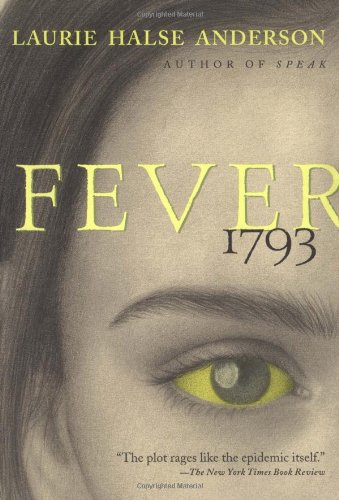
Fever 1793 by Laurie Halse Anderson is about Mattie Cook, a girl who works at her mother, Lucille Cook’s coffee shop in Philadelphia. The book follows her journey during the Yellow Fever pandemic as she struggles to adjust to living in a fever-driven city. During this challenging time, Mattie relies on her friends and family, including her grandfather, Nathaniel, Nell, and Eliza. This historical fiction novel in the first person point of view explores the main idea of growing up. Fever is an excellent example of a historical fiction novel because it is set in old Philadelphia during the Yellow Fever Pandemic that happened.
I generally like books about war and disease because they have a good plot, and this book was no different. It brought me onto the streets of Philadelphia and into the yellow fever pandemic. For example (pg. 27), “The market sells stretched for three blocks in the center of the street. West Indian women stood by their pepperpot kettles, stirring fragrant stews, while the hot corn girls walked up and down the street. The distant call of a charcoal man’s horn sounded at the far end of the market. Chickens clucked and geese honked, customers argued about the price of pears, and children ran everywhere.” I loved how this book included the dates and a quote at the beginning of every chapter. For example, (pg.192) “October 1, 1793, “We set out where we could be useful—the black people were looked to. We then offered our services in the public papers, by advertising that we would remove the dead and procure nurses.” — Richard Allen and Absalom Jones, A Narrative of proceedings of the Black people during the late awful Calamity in Philadelphia in the year 1793” One thing I didn’t like about this book was how it was a very quick book. Each event was short and quickly shoved over. But, each event did have repercussions throughout the story.
Want to check it out? You can buy it here!

